Loading article
Loading page...
Think of your Amazon store like a high-performance race car. You've built an incredible product—that's the car itself—but winning the race takes more than just a great engine. You need an elite pit crew and a brilliant strategist calling the shots.
This is exactly where Amazon account management services come in. They are the expert team that handles fueling (inventory), fine-tuning the engine (PPC advertising), perfecting the aerodynamics (listing optimization), and making critical race-day decisions (promotions and growth strategy).
This kind of partnership is essential for navigating the sheer complexity of Amazon's marketplace. The platform isn't just a sales channel; it's a living, breathing ecosystem with its own unforgiving algorithms, fierce competition, and operational hurdles that can sideline even the best products in a heartbeat.
Modern account management has evolved far beyond simply ticking off daily tasks. It's now a holistic discipline that weaves together several key areas to create a powerful, self-sustaining growth engine:
This integrated approach is mission-critical in a marketplace that gets more crowded by the day. The reality is that third-party sellers are the dominant force on Amazon. In Q3 2025, they accounted for 62% of Amazon's total sales, a huge jump from just 45% back in 2015. As more sellers fight for their piece of the pie, the battle for visibility and sales has become incredibly intense. Learn more about the rise of third-party sellers and what it means for brands.
A top-tier management service doesn't just manage your account; it builds a sustainable, profitable business asset. The goal is to drive long-term profit and brand equity, not just temporary sales spikes.
Ultimately, bringing on an Amazon account management service is an investment in expertise, efficiency, and defense. It gives you the strategic oversight needed to not only compete but to win in the world’s biggest online marketplace.
Smart Amazon account management services aren't about ticking off a checklist of isolated tasks. It’s about managing an interconnected ecosystem where every single component—from your product images to your inventory levels—directly impacts the others. A small tweak in one area can create a massive ripple effect, boosting ad performance and even your stock health.
A true partnership focuses on six core pillars that work in sync to create a growth flywheel. If you neglect one, the whole structure weakens, leading to wasted ad spend, missed sales, and a brand that just can't seem to get ahead. Grasping how these pieces fit together is the first step toward building a dominant presence on the platform.
The infographic below paints a clear picture of this interconnected system, where each function is a critical gear in a high-performance machine.
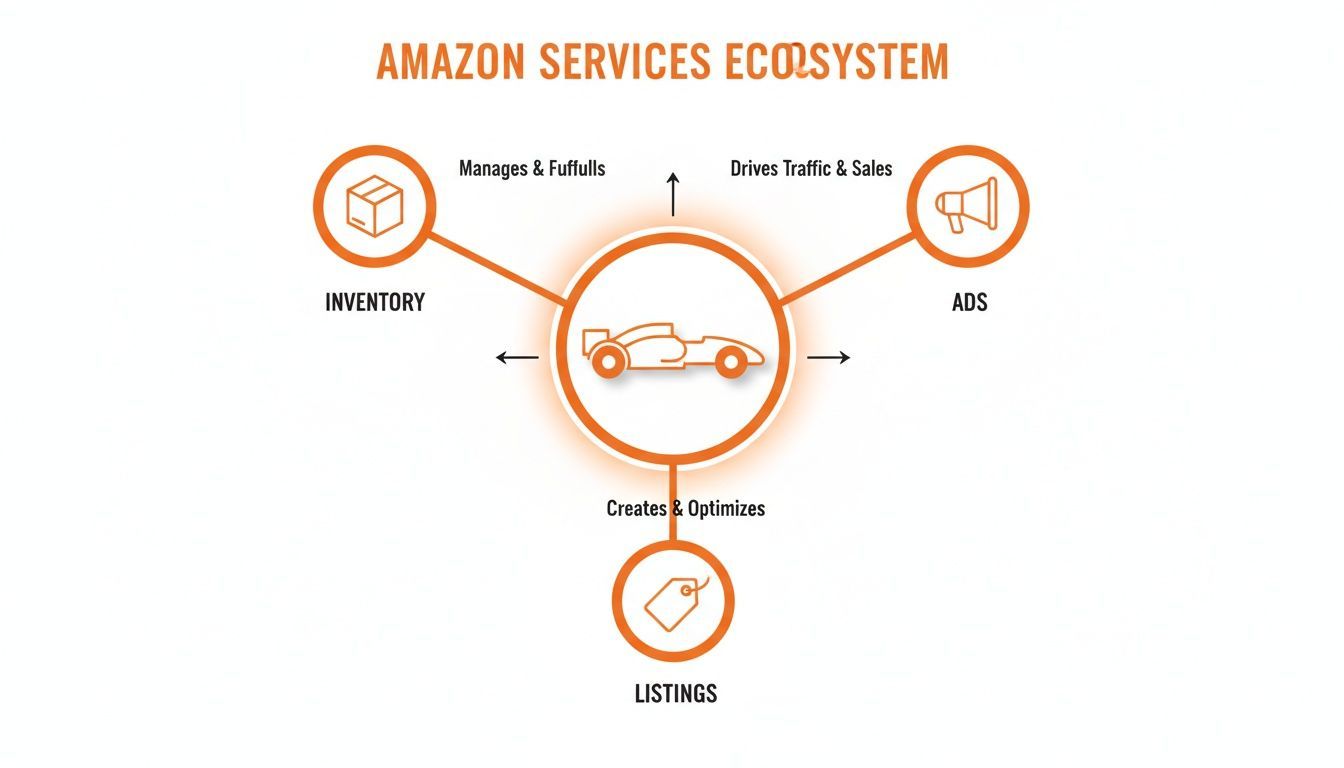
This map shows how listings, advertising, and inventory aren’t separate functions but gears in the same engine, all driving toward one thing: marketplace success.
To give you a clearer idea of how a full-service agency approaches this, here’s a breakdown of the key service pillars.
Service Pillar
Strategic Objective
Key Activities
Listing & Storefront Optimization
Maximize conversion rates and organic visibility.
Keyword research, copywriting, A+ Content, storefront design, image optimization.
PPC & DSP Advertising
Drive targeted traffic and capture demand at all funnel stages.
Sponsored Products/Brands/Display, DSP campaigns, retargeting, budget management.
Inventory & Logistics Management
Ensure product availability and avoid costly stockouts.
Demand forecasting, FBA shipment creation, IPI score management, 3PL coordination.
Customer Service & Reputation
Build brand trust and protect account health.
Review monitoring, buyer-seller messaging, feedback management, case logging.
Analytics & Reporting
Provide data-driven insights for strategic decision-making.
Performance dashboards, GA4 integration, market trend analysis, KPI tracking.
Compliance & Account Health
Mitigate risks and maintain good standing with Amazon.
Policy monitoring, listing violation resolution, account health checks.
Each pillar supports the others. A great listing makes your ads cheaper and more effective, while solid inventory management ensures those ads lead to actual sales, not stockouts.
Think of your product detail page as your digital shelf. This is the exact spot where a customer decides to either hit "Add to Cart" or click over to your competitor. Optimization here is way more than just stuffing keywords into a title—it's about crafting a compelling experience that drives conversions.
This involves:
A perfectly optimized listing doesn't just convert shoppers; it also improves your organic rank and lays the foundation for all your advertising to succeed.
A great listing is your best salesperson, working 24/7 to convince and convert. It’s the foundation for every ad dollar you spend. When your listing converts well, your ads just work harder.
Traffic is the fuel for your Amazon engine. A skilled management partner uses a layered advertising strategy to catch customers at every stage of their journey, from the moment they realize they have a need to the final click to buy.
This advertising pillar covers two main territories:
The real magic happens when you combine the two. DSP campaigns can fill the top of your funnel with new audiences, who can then be converted with sharp PPC ads once they start their product search on Amazon. This full-funnel approach means you’re not just capturing existing demand—you’re actively creating it.
You can have the world's best listing and the most brilliant ad campaigns, but if your product is out of stock, none of it means a thing. Solid inventory management is the operational backbone of any serious Amazon business.
A top-tier agency doesn’t just watch your stock levels; they manage them proactively.
Key activities include:
Poor inventory health is a direct hit to your sales velocity and organic ranking, making it one of the most critical—and most frequently overlooked—parts of account management.
Finally, protecting your brand’s reputation is non-negotiable. In a marketplace that runs on reviews and seller feedback, maintaining a positive public image is everything. Great customer service turns one-time buyers into loyal fans and brand advocates.
This pillar is all about:
When you put them all together, these pillars create a system where each part makes the others stronger. Optimized listings improve ad conversions, effective ads drive predictable sales for better inventory forecasting, and fantastic customer service protects the brand you’ve worked so hard to build. That's the holistic approach that defines modern Amazon account management services.
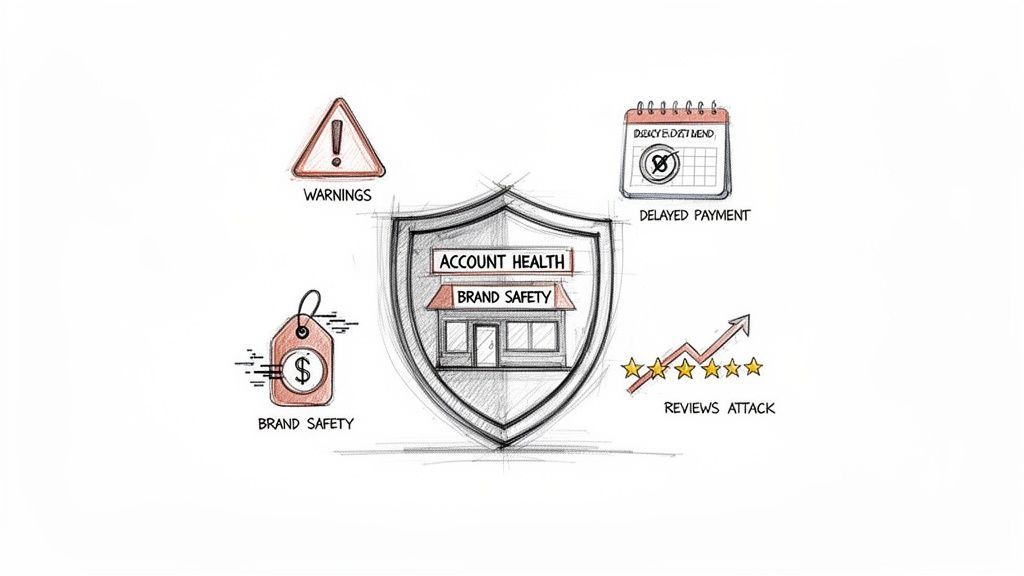
Selling on Amazon can feel like a high-stakes obstacle course. One moment, your sales are climbing, and the next, a sudden account health warning brings everything to a grinding halt. This unpredictable environment is exactly why professional Amazon account management services aren't just a growth driver—they're a critical defense system for your brand.
The marketplace is littered with challenges that can derail even the most promising products. These aren't minor hiccups; they are significant operational threats that demand constant vigilance and an expert on your side. Without a dedicated team watching your back, your business is exposed to risks that can wreck your revenue, cash flow, and brand stability.
Amazon is notorious for its ever-changing rulebook. A policy that was perfectly fine yesterday could trigger a listing suspension tomorrow. An algorithm update can suddenly tank your organic rankings, leaving you scrambling to figure out why sales have evaporated overnight.
These shifts often come without warning and demand an immediate, informed response. For example, a minor tweak in packaging requirements could lead to your entire inventory being flagged as non-compliant, stranding your products in a fulfillment center and freezing your sales.
The biggest risk on Amazon isn't your competition; it's the platform itself. An expert management service acts as your interpreter and advocate, ensuring you stay ahead of policy changes and react swiftly to protect your business.
Beyond policy shifts, daily operations present a minefield of potential problems that can directly hit your bottom line. These are the persistent headaches that keep brand owners up at night.
A poll monitoring discussions in Amazon's forums highlighted payment and financial issues as a major pain point. Sellers aren't just dealing with simple operational snags; they're facing deep platform stability concerns that drain cash flow and mental energy. Issues like lost inventory, sudden category changes, suspension risks, and black-hat attacks create a constant state of uncertainty. You can read the full breakdown of seller challenges to see just how widespread these problems are.
Common operational nightmares include:
The Amazon marketplace is fierce, and unfortunately, not everyone plays by the rules. Black-hat tactics are a real and present danger that can cause immense damage to your brand's reputation and sales.
These underhanded strategies are designed to sabotage your success and require a proactive defense, not just a reactive one.
Examples of Aggressive Competitor Tactics:
Handling these challenges requires more than a casual familiarity with Seller Central. It demands deep platform expertise, proven processes for crisis management, and the bandwidth to see complex cases through to the end. This is the core value of an experienced Amazon account management service—turning chaos into control and protecting the business you’ve worked so hard to build.
Picking the right partner to manage your Amazon account is a huge decision. Think of it like hiring a general contractor to build your dream home. You wouldn’t just go with the person who has the flashiest flyer; you’d look at their past work, talk to their clients, and make sure they have a solid plan. The same goes for an Amazon agency.
Making the right call means finding a team that actually gets your brand’s goals, fits your culture, and shares your ambition for growth. A great agency feels like an extension of your own team, bringing strategic ideas and proactive management to the table. The wrong choice? That leads to wasted ad spend, stalled growth, and a whole lot of frustration.
Before you sign on the dotted line, you have to look past the sales pitch and see what an agency is really made of. A transparent, confident agency will welcome the tough questions. Use this checklist to guide your conversations and make sure you’re making a smart choice.
Verifiable Case Studies with Metrics That Matter: Don't let them get away with vague promises like "we'll increase your sales." Ask for detailed case studies that are relevant to your industry or brand size. Look for metrics that show true business health, like improvements in Total Advertising Cost of Sale (TACOS), not just ACOS. Real success stories are built on growing organic sales and boosting profit margins.
Team Expertise and Certifications: Find out who will actually be working on your account every day. Ask about the team’s structure, their level of experience, and whether they hold any official certifications. For example, being an Amazon Ads Verified Partner signals a level of expertise and a direct relationship with Amazon that other agencies just don't have. An
is a key trust signal you should look for.
Clear Communication and Reporting Style: A solid partnership is built on communication. Ask to see a sample report. Is it just a spreadsheet data dump, or does it offer real insights and strategic recommendations? A top-tier agency will be proactive, set up regular strategy calls, and deliver reports that clearly connect their actions to your business goals.
Choosing an agency isn't just about outsourcing tasks; it's about gaining a strategic partner. Their ability to translate data into a clear growth story is far more valuable than their ability to simply pull reports.
Knowing what to look for is only half the battle; you also need to know what to avoid. Certain claims and business practices are major red flags that often point to an inexperienced or untrustworthy agency. If you spot any of these, it’s time to be cautious or walk away completely.
To make it simple, we've put together a quick comparison table. On one side, you have the positive signals of a great partner. On the other, the red flags that should make you think twice.
Positive Signal (What to Look For)
Red Flag (What to Avoid)
Provides detailed case studies with TACOS and profit improvements.
Makes vague guarantees of "Page 1 Rankings"—no one can promise this.
Has an experienced, certified team, including Amazon Ads Partners.
Insists on owning your ad accounts, holding your data hostage.
Offers a clear, structured onboarding plan for the first 90 days.
Has an unclear or non-existent onboarding process.
Uses a transparent, flexible pricing model tailored to your needs.
Pushes "one-size-fits-all" pricing with hidden fees.
Communicates proactively with insight-driven reporting.
Focuses only on ACOS, ignoring overall business profitability (TACOS).
You always retain full ownership and admin access to your accounts.
Lacks relevant experience in your specific product category or industry.
Ultimately, a trustworthy agency will act like a partner invested in your long-term success, not a vendor just trying to hit their sales numbers. They'll be transparent about their process and focus on the metrics that truly drive profitable growth for your brand.
By carefully vetting potential agencies with this checklist and keeping an eye out for red flags, you can confidently find a partner who will not only manage your account but help you build a more profitable and resilient brand on Amazon.
Clicks and impressions might look nice on a report, but they don't pay the bills. When you're looking at amazon account management services, you have to shift your focus from these vanity metrics to the Key Performance Indicators (KPIs) that actually measure the health and profitability of your business. A great agency partner doesn't just chase clicks; they build a strategy around metrics that drive real, sustainable growth.
This means looking past the surface to see the full story of your performance. While many sellers get obsessed with the performance of a single ad campaign, a skilled management team uses a much wider lens. They see how advertising, organic sales, and overall brand presence all work together.
Advertising Cost of Sale (ACOS) is the metric everyone knows. It measures how efficient your ad spend is within a single campaign, and while it's useful, it only shows a tiny piece of the puzzle. It tells you what you spent to get a sale from an ad, but it completely ignores the powerful "halo effect" that advertising has on your entire account.
A much more powerful KPI is Total Advertising Cost of Sale (TACOS). This metric divides your total ad spend by your total revenue—that includes both ad-generated and organic sales. TACOS shows you the true impact of your advertising on your overall business growth.
A low ACOS with a high TACOS means your ads are efficient, but they aren't lifting your organic sales. A healthy, decreasing TACOS, on the other hand, shows your ads are successfully driving brand awareness and boosting your organic rank, creating a self-sustaining growth flywheel.
An expert agency uses advertising not just to grab immediate sales but to improve your product’s visibility in organic search results. This strategic approach is what separates a simple ad manager from a true growth partner.
To get a complete view of your Amazon channel's health, you need to track a balanced scorecard of KPIs. Each metric offers a different insight, and together, they paint a full picture of your momentum, profitability, and operational efficiency.
Here are the KPIs a top-tier agency will be watching relentlessly:
By focusing on these KPIs, you and your agency can make data-driven decisions that build a resilient and profitable sales channel, moving far beyond the limited scope of basic advertising reports.
Partnering with an Amazon agency can feel like a big leap, but a professional team won’t just wing it. They follow a structured roadmap to make the transition smooth and build momentum from day one.
The first 90 days aren't about flipping some magic switch for instant results. Instead, it’s a methodical process of discovery, stabilization, and then strategic scaling. Understanding this journey helps set clear expectations for what happens and when. It's a collaborative effort where the agency dives deep into your business to make sure every action aligns with your long-term goals.
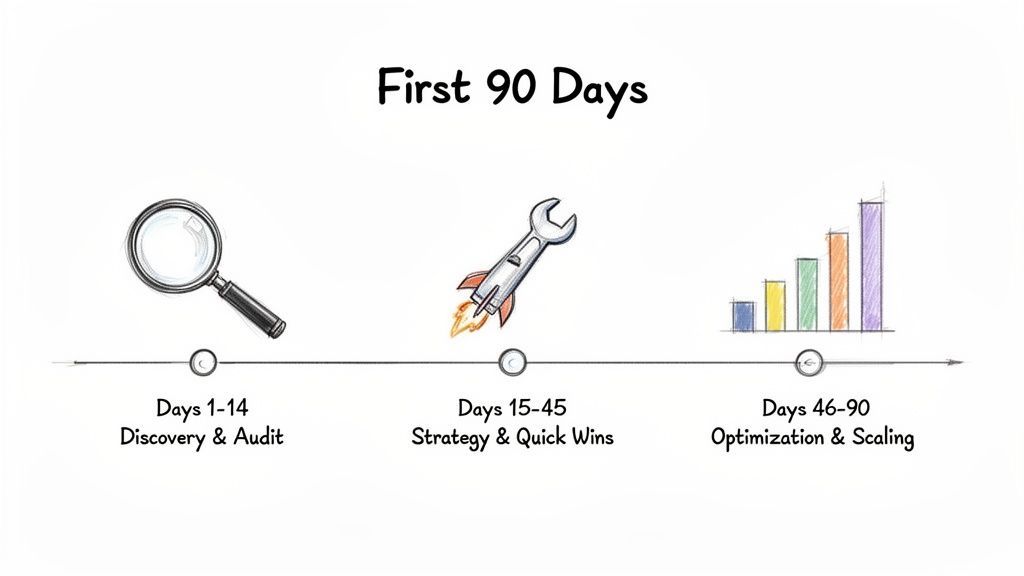
The first two weeks are all about deep learning. Think of your new agency as a detective, meticulously examining every corner of your Amazon account to understand its history, strengths, and weaknesses. This isn't a quick glance; it's a full-blown audit to build a complete picture of where your brand stands right now.
Key activities you'll see in this phase include:
This phase wraps up with a foundational report that outlines all the initial findings and sets the stage for the real strategic work ahead.
Armed with data from the audit, the agency shifts from analysis to action. The goal here is twofold: stabilize performance and snag any immediate opportunities for improvement. This is where you'll start to see tangible changes in your account as the team implements foundational fixes.
You can expect your agency to be focused on:
This period is all about building a solid foundation. These "quick wins" aren't just about boosting sales overnight; they're about plugging leaks and creating the operational stability needed for more aggressive growth down the line.
With a stable foundation locked in, the focus now pivots to aggressive optimization and scaling. Your agency starts executing the long-term growth strategy they developed in the previous phase. This is where more advanced tactics, rigorous testing, and expansion efforts really come into play.
Activities in this final onboarding stage often include:
By the end of day 90, your account should be fully optimized, your advertising running efficiently, and a clear, data-driven roadmap for future growth is officially in place. The real fun is just beginning.
When you're thinking about bringing on a partner, it's natural to have questions. Getting straight answers is the only way to feel confident before you commit to any Amazon account management services.
Let's cut through the noise and tackle the most common ones we hear.
Most agencies aren't one-size-fits-all. They usually offer a few different ways to structure the partnership, depending on your brand's needs and where you are in your growth journey. The key is finding a model that feels right for your goals and budget.
A good agency partnership is a collaboration, not a takeover. You should always retain full ownership and admin access to your Seller Central and ad accounts. Full stop.
Think of your agency as an expert co-pilot. They’re there to handle the complex flight controls and navigation—the day-to-day operations and strategy—but you're still the captain. You have the final say on big decisions like budget changes or major strategic shifts.
Everyone wants fast results, and while some "quick wins" can definitely pop up in the first 30-45 days (like patching up wasted ad spend), real, sustainable growth is a marathon, not a sprint. A realistic timeline usually looks something like this:
Months 1-3: We focus on fixing the foundations, stabilizing performance, and gathering clean data. You’ll start seeing better efficiency and improved account health right away.
Months 4-6: This is where the optimization and scaling efforts really start to compound. You'll see noticeable growth in your organic rank and a clear upward trend in total sales.
Ready to stop asking questions and start seeing results? The team at Clickstera Solutions LLC provides the expert partnership you need to scale profitably on Amazon. We combine deep platform knowledge with a white-glove service approach to build a strategy that drives real growth. Discover how our full-service management can transform your brand at https://clickstera.com.
Talk to Clickstera and get a clear next-step plan to scale your performance marketing.