
Loading article
Loading page...
Think of a standard Amazon product page as a single item sitting on a massive, crowded retail shelf. Now, imagine having your own custom-designed, multi-page boutique right inside that same mall. That’s an Amazon Brand Store.
It’s your dedicated digital storefront, available exclusively to brand-registered sellers, where you control the entire experience. This is your space to showcase your full product lineup and tell your brand's story, completely free from competitor ads.
To really grasp the power of a Brand Store, you have to understand the strategic shift it represents. You’re moving from being just another seller with a transactional listing to becoming a legitimate brand destination within the Amazon ecosystem. The only prerequisite? You must be enrolled in Amazon Brand Registry, which simply verifies you as the brand owner.
This isn't just about making things look pretty. It's about building a mini-website where you can guide the customer journey, build a narrative, and escape the chaos of the standard search results page.
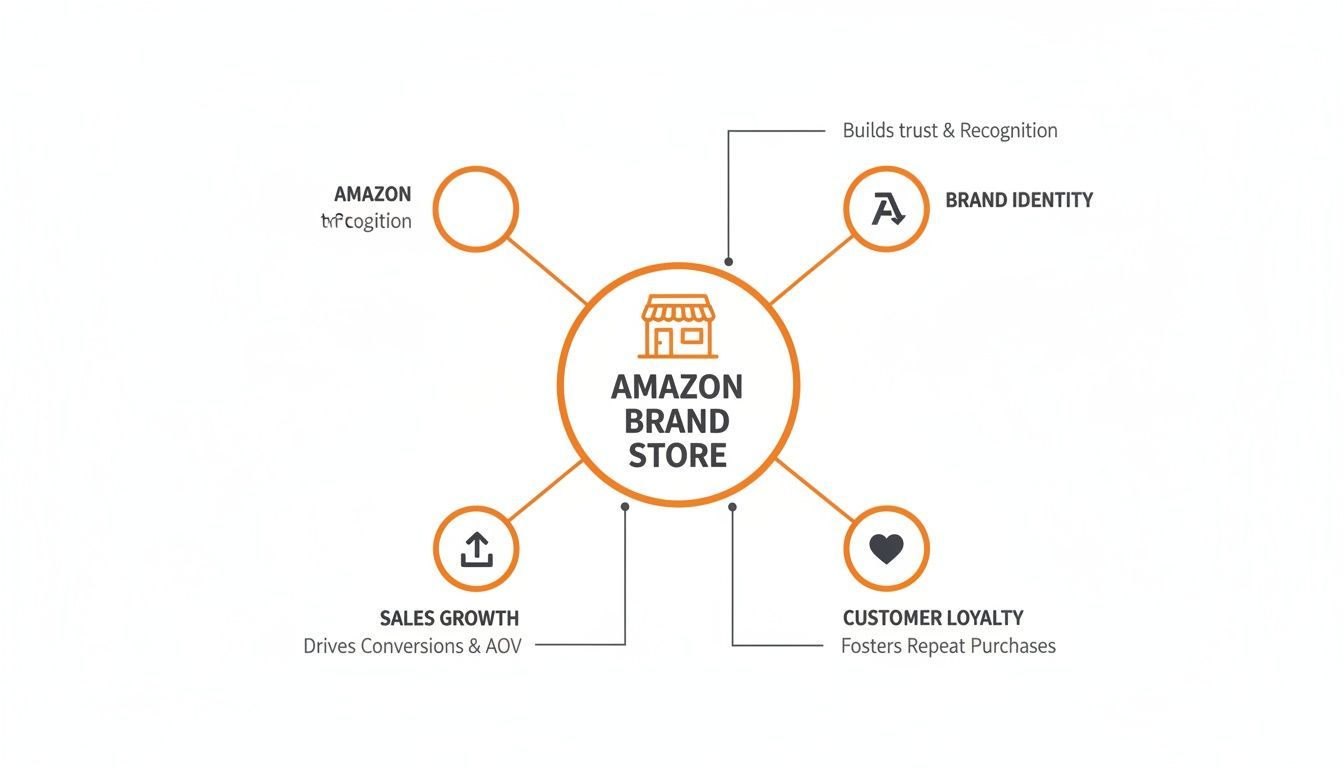
As the diagram shows, a Brand Store isn't just a feature—it's a hub for building brand identity, fostering loyalty, and driving real sales growth.
Years ago, Brand Stores were little more than vanity pages. Today, they've evolved into powerful conversion engines. In a marketplace this competitive, creating a curated shopping environment is no longer a "nice-to-have"; it's a necessity.
Amazon’s own data shows that shoppers who visit a Brand Store don't just buy more often—they also tend to have a higher average order value. For anyone in a crowded category, a Store is your best tool for making a direct connection with customers, cross-selling related products, and building the kind of trust a single product page never could. You can dig into more Amazon statistics on Bloggingwizard.com to see just how important this brand-centric approach has become.
Investing the time to build out a proper storefront delivers tangible results that hit both your top-line sales and your long-term brand equity. A well-designed Store quickly becomes the central hub for all your marketing efforts, both on and off Amazon.
The table below breaks down the fundamental differences between a simple product page and a full-fledged Brand Store.
Feature
Product Detail Page
Amazon Brand Store
Primary Goal
Convert a single product sale
Build brand loyalty and drive catalog-wide sales
Customer Experience
Transactional, focused on one item
Immersive, story-driven, and curated
Competitor Presence
Competitor ads are everywhere
100% competitor-free environment
Content Control
Limited to standard templates (A+ Content)
Fully customizable layouts, pages, and navigation
Product Showcase
A single product with variations
Entire product catalog organized by collections
Analytics
Basic traffic and conversion data
Detailed Store-level analytics (visitors, views, sales per visitor)
Use Case
Driving immediate, item-specific conversions
Launching new products, cross-selling, and building a brand following
This comparison makes it clear: while a Product Detail Page is essential for the point of sale, the Brand Store is where you build the relationship that keeps customers coming back.
Ultimately, a Brand Store isn't an optional add-on anymore. It's a critical tool for any serious brand that wants to stand out, own its narrative, and achieve sustainable growth on the world's biggest marketplace.
A visually appealing Brand Store is a good start, but a great one is engineered to turn visitors into loyal customers. Think of it less like a simple product catalog and more like a guided tour of your brand—one that turns passive browsers into active buyers. Success really comes down to a smart mix of visual hierarchy, intuitive navigation, and compelling storytelling.
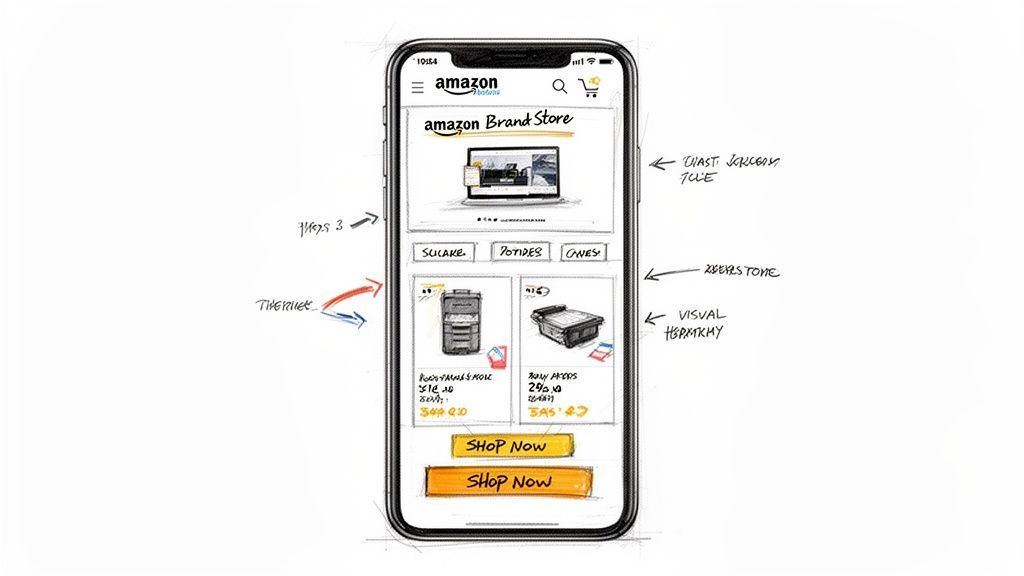
First things first: you have to design for the majority of your audience. A huge chunk of Amazon’s 2.5 billion monthly visits comes from mobile devices, so a mobile-first design isn't just a best practice; it's essential for survival. This means prioritizing clean layouts, large tap targets, and vertical imagery that looks fantastic on a smartphone screen. If your store is a headache to navigate on mobile, you’re losing sales before customers even see your products.
Your store’s homepage is the grand entrance. It needs to make a strong first impression while clearly showing people where to go next. A cluttered or confusing homepage is the digital equivalent of a messy storefront—it just pushes people away.
To create a seamless experience, structure your store with a clear hierarchy:
A Brand Store is your chance to build a narrative. Every image, headline, and product grid should work together to tell a cohesive story about who you are and why customers should choose you.
Once your structure is solid, the next step is to gently guide visitors toward a purchase. Your copy should reflect your brand’s voice—whether it's playful, professional, or technical—and always highlight the unique benefits of your products.
Placing clear calls-to-action (CTAs) is crucial. Instead of just using a generic "Buy Now" button everywhere, try more engaging, action-oriented language like "Explore the Collection" or "Shop Our New Arrivals." This subtle shift encourages exploration and keeps shoppers browsing your catalog longer.
This level of control is exactly why Amazon Brand Stores are so powerful. In a marketplace where third-party sellers contribute over 60% of sales, a well-designed store is your single best tool for standing out. These storefronts are critical for capturing a piece of Amazon's massive $637.9 billion revenue in 2024. For brands in beauty, electronics, or home goods, this is the key to turning traffic into profit. You can learn more about these powerful Amazon seller statistics on edesk.com.
As an Amazon Verified Partner, we help brands build these high-converting experiences every day. You can view our partner verification to see our credentials.
Think of your Amazon Brand Store as a set of digital LEGOs. The Store builder gives you a whole toolbox of content modules, and knowing how to snap them together is what separates a generic product catalog from a truly immersive brand experience. The goal isn't just to list features; it's to translate your marketing goals into a storefront that performs.
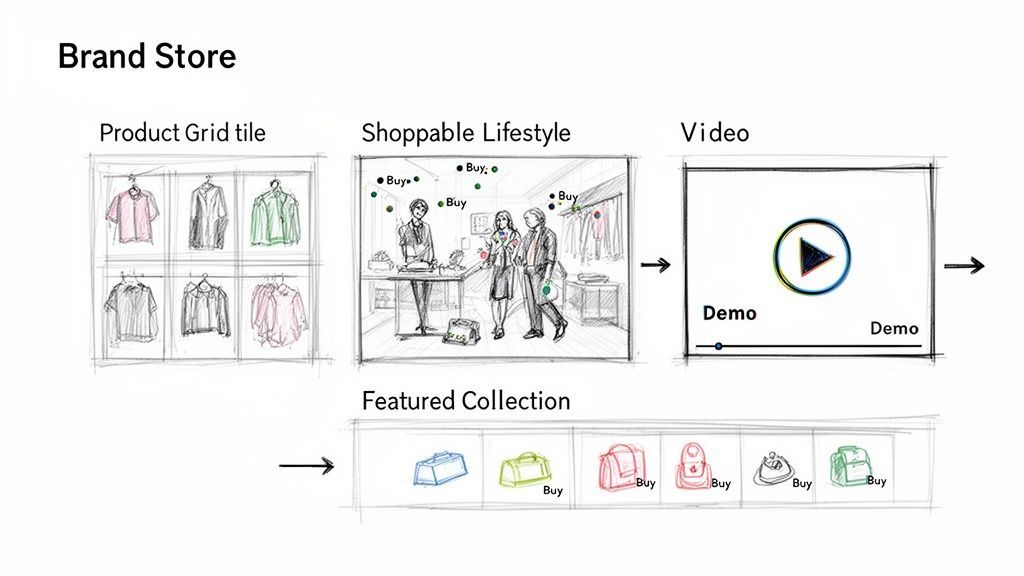
The real magic isn't in the modules themselves, but in how you combine them to tell a story. Sure, a basic product grid gets the job done. But a shoppable image turns a lifestyle photo into an interactive lookbook, letting customers add items to their cart right from an aspirational scene. That's a game-changer.
Every module in the Brand Store builder has a specific job, but it’s the creative application that really drives engagement. You have to match the right tool to the right marketing objective to create a seamless path from discovery to purchase.
Think about these strategic uses for core modules:
Your Brand Store isn’t just a place to list products; it’s a dynamic space to launch them. Create a dedicated page for a new product line, building hype and educating customers in a controlled environment, totally free from competitor distractions.
Beyond individual modules, your store’s entire structure can be built to support specific marketing campaigns. This approach turns your Amazon Brand Store into a multi-purpose landing page where you can centralize traffic and measure results with total precision. Think of it as creating custom mini-sites within your main store.
For example, a fashion brand could build out a "Summer Getaway Collection" page for the season, featuring curated outfits, travel essentials, and even some light blog-style content. This not only makes shopping easier but also creates a much richer customer experience.
Here are a few more powerful ways to use your Store:
A beautifully designed storefront is only half the battle. Without a steady stream of visitors, even the best Amazon Brand Stores remain undiscovered digital ghost towns. Building a solid traffic strategy means thinking beyond just your product listings and getting intentional about who you’re bringing to your store and why.
It requires a coordinated effort, blending powerful on-Amazon advertising with strategic off-platform marketing to create a constant flow of qualified shoppers. This isn't just about getting clicks; it's about attracting the right audience and guiding them to a brand experience you completely control.
A store without visitors is just a digital warehouse. Your goal is to turn it into a bustling retail destination, and that starts with making it easy for customers to find you—both inside and outside of Amazon's walls.
Your first and most powerful tool for driving internal traffic is Sponsored Brands advertising. Unlike other ad types that dump shoppers onto a single product page, Sponsored Brands ads let you link directly to your Brand Store's homepage or even a specific subpage.
This is a game-changer for launching a new collection or promoting seasonal deals. Instead of sending traffic to one product, you can direct them to a custom, curated landing page that tells a much richer story.
Beyond paid ads, on-platform SEO is vital for organic discovery. This means optimizing your Brand Store's page titles and meta descriptions with relevant keywords. When done right, your store can start appearing in Amazon's search results, giving you a free and highly relevant source of traffic from shoppers actively looking for products like yours.
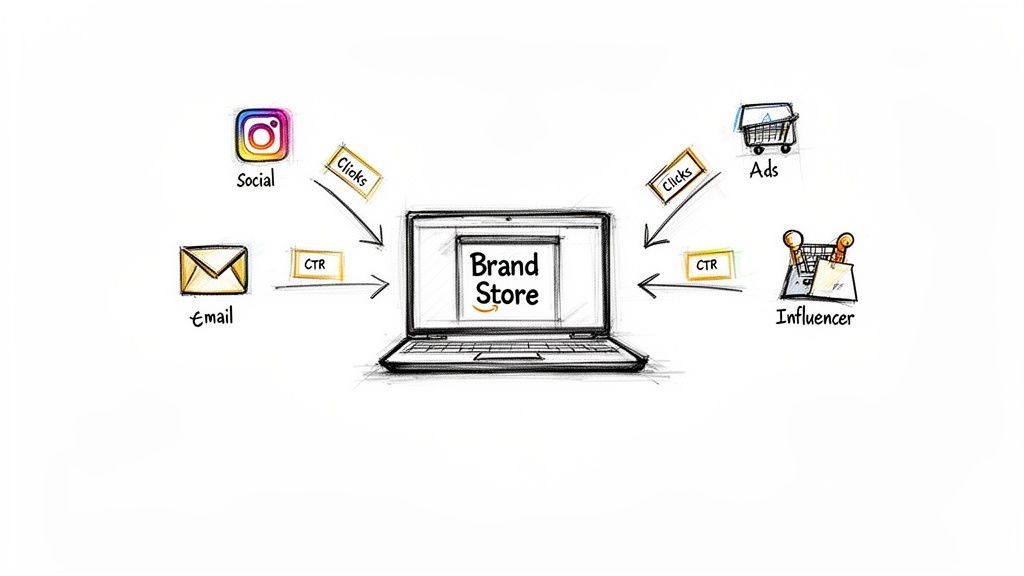
Think of your Brand Store as the ultimate landing page. Every ad, social post, or email campaign should point back to this central hub, creating a seamless and consistent brand journey that boosts conversions and deepens customer loyalty.
Your marketing efforts shouldn't stop at Amazon's borders. In fact, your Brand Store is the perfect destination for traffic from your external marketing channels. It offers a focused, branded shopping experience that a standard product detail page simply can't match.
Here’s where you connect your broader digital presence with your point of sale:
The table below breaks down the key traffic sources you should be focusing on, both on and off Amazon.
Traffic Source
Type
Primary Use Case
Key Metric
Sponsored Brands Ads
Internal (On-Amazon)
Drive top-of-funnel traffic to curated landing pages and new collections.
Click-Through Rate (CTR)
Sponsored Display Ads
Internal (On-Amazon)
Retarget shoppers who viewed your products but didn't buy.
Return on Ad Spend (RoAS)
Social Media
External (Off-Amazon)
Engage followers with lifestyle content and drive them to featured product pages.
Store Visits from Source Tag
Email Marketing
External (Off-Amazon)
Announce promotions and new products to your loyal customer base.
Sales per Visitor
Influencer Marketing
External (Off-Amazon)
Leverage creator trust to introduce your brand to new, relevant audiences.
Conversion Rate from Source Tag
Organic Search (Google)
External (Off-Amazon)
Capture high-intent shoppers looking for solutions your products provide.
Store Page Views
By treating your Brand Store as the central destination for all traffic, you create a powerful flywheel effect. More traffic leads to more sales, which improves your store's visibility and organic ranking on Amazon, further fueling your growth.
A great-looking Brand Store is just the beginning. The real magic happens when you start digging into the data, because that’s what turns a simple product showcase into a sales machine. Your command center for this is the Amazon Store Insights dashboard.
It's easy to get lost in the numbers, but the goal isn't to track every single metric. It’s about focusing on the key performance indicators (KPIs) that actually tell you what’s working and what isn’t. This is how you move from just looking at a sales report to making smart, informed decisions that improve your Store week after week.
The Insights dashboard gives you a direct window into how shoppers behave once they land in your Store. Don’t get bogged down trying to analyze everything at once. Start by mastering the essentials, because these metrics tell the most important parts of your performance story.
Focus on these core KPIs first:
Think of your Store Insights dashboard as a map of your customers' journey. It shows you where they came from, which aisles (pages) they explored, and what they ultimately bought. Use this map to guide your optimization efforts.
True optimization starts when you use data to answer specific business questions. For example, which of your product categories is resonating most with shoppers? By jumping into the "Pages" tab in Insights, you can see the traffic and sales for each individual subpage.
Let's say your "Best Sellers" page gets tons of traffic but generates few sales. That’s a clear signal that you might need to adjust the product mix or improve how you're merchandising that page.
This data-first approach is also critical for tracking the ROI of your off-Amazon marketing efforts. When you run a social media campaign or work with an influencer, you have to use source tags. These are unique tracking codes you add to your Store URL, which allow Amazon to report back on the specific traffic and sales that came from that link.
This tells you exactly which campaigns are driving real results, helping you put your marketing dollars where they'll work hardest. For brands aiming to master their digital footprint, understanding how on-platform analytics and broader SEO strategies work together is key. You can find excellent guidance on this from experts like RankMath.
Taking your brand global feels like a huge undertaking, but your Amazon Brand Store is one of the most powerful tools you have to make it happen. The best way to think about it is to treat your successful home-market Store as a master template. You don’t have to reinvent the wheel every time you launch in a new country like the UK, Germany, or Japan. Instead, you can copy your proven design and messaging foundation and hit the ground running.
This turns your Brand Store into a scalable blueprint, a central hub you can roll out in each country to build brand equity with a consistent feel. The core structure is already there, but the real magic happens when you start localizing it. And I'm not just talking about a simple language translation.
To really click with international shoppers, you have to go deeper. Your content needs to reflect local nuances and cultural norms, making your brand feel like it truly belongs in that market. This is where you move from being a foreign company to a trusted local choice.
Here are a few key strategies to get this right:
A global brand thinks internationally but acts locally. Your Brand Store is the perfect stage to demonstrate this understanding, building trust and driving sales by showing each market that you understand their unique culture.
This strategy is absolutely vital for tapping into Amazon’s massive international footprint. The platform's global net sales soared past $140 billion in 2024, with growth exploding across more than 25 countries. By using your Brand Store as a finely-tuned conversion asset, you can turn those massive global numbers into localized wins, controlling your brand’s story in every new marketplace you enter. To learn more about where the market is heading, check out these insights on Amazon's global trends at Cool Nerds Marketing.
Diving into Amazon Brand Stores always brings up a few key questions. Let's walk through the most common ones sellers ask so you can move forward with total confidence.
This is one of the best parts—building and launching an Amazon Brand Store is completely free. All you need is to be enrolled in Amazon Brand Registry.
Of course, "free" refers to Amazon's tool itself. You'll still want to factor in the costs of creating killer content. Think professional photography, video production, or sharp copywriting to make sure your storefront really pops and converts visitors into customers.
Yes, and you absolutely should. Amazon lets you create a clean, memorable URL for your Store, like amazon.com/yourbrandname. This is a massive win for your off-Amazon marketing.
A custom URL makes it so much easier to drive traffic from social media, email campaigns, or influencer collaborations. It looks professional, builds trust, and is way simpler for shoppers to remember and type in.
Once you hit "submit," Amazon's moderation team usually takes about 24 to 72 hours to review and approve your Store. Just keep in mind this can stretch out a bit during busy seasons like Q4.
A smart move is to build and submit your Store well ahead of any big product launch or holiday sale. This way, you avoid any last-minute delays when traffic and sales potential are at their peak.
Absolutely. Think of your Brand Store as a living, breathing part of your marketing, not a static "set it and forget it" page. You can jump in and make edits anytime you want.
This flexibility is incredibly powerful. It's perfect for:
Keeping your Store updated makes it feel fresh and relevant, encouraging shoppers to come back. It also gives you a powerful tool to react quickly to sales trends and new opportunities.
Ready to build a high-converting storefront that drives real growth? Clickstera Solutions LLC is an Amazon Verified Partner specializing in full-service account management and advanced advertising strategies that turn your brand's potential into profit. Let's scale your brand together.
Talk to Clickstera and get a clear next-step plan to scale your performance marketing.