
Loading article
Loading page...

#AmazonPPC #LowerACoS #IncreaseROAS #AmazonAdvertising #PPCOptimization
Learn proven strategies to lower ACoS and increase ROAS on Amazon PPC. Expert tips on bid optimization, keyword targeting, listing improvements, and campaign structure for profitable Amazon advertising in 2025
Amazon PPC has become one of the most powerful tools for driving visibility and conversions for sellers. But with rising competition and increasing ad costs, keeping ACoS low while boosting ROAS has become more challenging than ever. Whether you work with an Amazon PPC agency, use Amazon PPC management software, or handle campaigns manually, this guide will help you optimize better.
Running Amazon PPC campaigns without tracking key metrics like ACoS and ROAS is like navigating in the dark. These metrics reveal whether your ad spend is profitable or wasted. By optimizing these metrics, sellers can reduce costs, improve conversion rates, and scale efficiently. This guide covers actionable strategies to lower ACoS, boost ROAS, and manage Amazon PPC campaigns like a pro in 2025.
Understanding ACoS and ROAS is fundamental to any profitable Amazon PPC strategy. ACoS tells you how much of your revenue is spent on ads, while ROAS measures the revenue generated for each dollar spent. Together, they help you decide which campaigns to scale and which to optimize or pause.
ACoS (Advertising Cost of Sale) measures the percentage of your sales spent on ads. A lower ACoS indicates more efficient campaigns, helping you control budgets and improve profitability.
Key points:
ROAS (Return on Ad Spend) shows how much revenue you earn for each dollar spent on ads. A higher ROAS means your campaigns are driving strong returns, giving insight into scaling potential.
Key points:
High ACoS often indicates inefficiencies in targeting, listing quality, or campaign setup. Even if sales volume is high, overspending on low-converting clicks can quickly eat into profits. Understanding the main causes of high ACoS is the first step to improvement.
Broad match or irrelevant keywords attract low-intent clicks that rarely convert. These wasted clicks quickly push ACoS higher. Many sellers fail to refine their keyword list regularly, causing continuous budget leakage. More relevant targeting almost instantly improves performance.
Key points:
Your ads may bring traffic, but if your listing is weak, shoppers won’t convert. Poor images, unclear descriptions, and missing details reduce your conversion rate. Low conversions lead to a higher ACoS because you spend more to generate sales. Strong listings directly reduce wasted ad spend.
Key points:
Without negative keywords, Amazon shows your ads to the wrong audience. This results in unnecessary clicks that drain your budget. Adding negatives helps block low-quality traffic and improve efficiency. It’s one of the fastest and simplest ways to bring down ACoS.
Key points:
Lowering ACoS requires methodical optimization. The goal is to reduce wasted spend while maintaining or increasing sales. These strategies provide a structured approach to efficiency.
Regularly adjusting bids based on keyword performance is essential for controlling spend. Decreasing bids for underperforming keywords can significantly lower ACoS. Meanwhile, increasing bids on strong performers maximizes your returns. Smart bid management helps you stay competitive without overspending.
Key points:
A weekly negative keyword routine helps protect your budget from irrelevant traffic. Each week, remove search terms that bring clicks but no sales. This keeps campaigns clean and reduces unnecessary costs. Over time, this improves efficiency and boosts ROAS.
Key points:
A clear and organized campaign structure gives you better control. Separating match types, segmenting top-performing keywords, and isolating branded terms help you optimize faster. A well-structured account reduces overlap and wasted spend. This leads to lower ACoS consistently.
Key points:
Improving ROAS requires increasing conversion rates and targeting high-intent shoppers. Focusing on listing optimization and keyword prioritization yields quick results.
Strong listings convert more traffic into sales, which directly improves ROAS. High-quality images, keyword-rich titles, and compelling bullet points increase trust and relevance. When your listing looks better than your competitors, shoppers are more likely to buy. Higher conversions lead to better ROAS at the same ad spend.
Key points:
Not every keyword brings profit, so focusing on proven winners is essential. Moving high-converting terms into exact-match campaigns gives you stronger control. This helps you generate more revenue without increasing spend. A targeted keyword strategy boosts ROAS quickly.
Key points:
Once your campaigns are optimized, advanced techniques help scale profitably without increasing ACoS. These require careful management but deliver strong efficiency gains.
Dayparting allows you to run ads only during the hours that convert best. This avoids wasted spend at times when shoppers rarely buy. Many sellers see an immediate ACoS drop by skipping late-night or low-conversion hours. It’s a smart way to make your budget work harder.
Key points:
Placement bid adjustments help amplify visibility in high-performing positions. Top of Search often delivers the best conversions, making it ideal for profitable keywords. Adjusting multipliers helps you win top spots without overspending. This leads to better ROAS and more profitable scaling.
Key points:
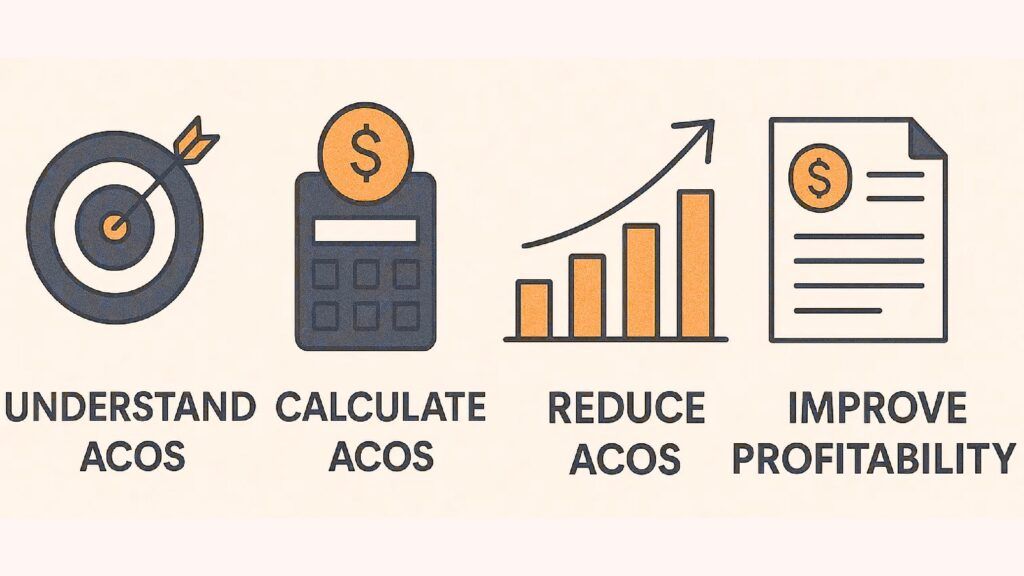
Sustainable PPC performance requires ongoing review and adjustments. Consistency ensures campaigns remain profitable over time.
Your Search Term Report shows exactly what customers typed before clicking your ads. Reviewing it weekly helps identify profitable search terms to target more aggressively. It also reveals irrelevant or costly terms that you should add as negatives. This simple habit keeps your campaigns clean and efficient.
Key points:
Not all campaigns are worth increasing budgets on. Focus on scaling campaigns with stable ACoS and strong ROAS. This ensures you grow profitably without risking unnecessary spending. Smart scaling leads to sustainable long-term results.
Key points:
Lowering ACoS + boosting ROAS is an ongoing process, and Clickstera makes it easier. With better listings, smart keyword targeting, and clean campaign structures, we help sellers scale profitably. Our weekly audits and negative keywords often cut ACoS by 20–30% and strengthen ROAS fast.
If you’re serious about lowering ACoS and boosting ROAS in 2025,
Clickstera can manage your Amazon PPC with proven optimization systems that deliver results.
What is a good ACoS for Amazon PPC?
A good ACoS depends on your product margins, business goals, and growth stage. For profitable products, sellers usually aim for an ACoS below their break-even point, while new launches may tolerate higher ACoS to gain visibility and sales momentum.
How can I lower my Amazon PPC ACoS effectively?
Lowering ACoS requires ongoing optimization, including removing non-converting keywords, adding negative keywords, refining bids, improving listing conversion rates, and focusing spend on high-performing campaigns that generate consistent sales.
What is ROAS in Amazon PPC and why does it matter?
ROAS shows how much revenue you earn for every dollar spent on ads, making it a key metric for measuring profitability. A higher ROAS means your campaigns are efficient and generating strong returns on ad spend.
How long does it take to improve ACoS and ROAS on Amazon PPC?
Initial improvements can appear within a few weeks, but sustainable results usually take 1–3 months of consistent testing, bid adjustments, and performance analysis.
Talk to Clickstera and get a clear next-step plan to scale your performance marketing.