
Loading article
Loading page...
Amazon advertising has entered a new era. What once felt like a straightforward way to buy visibility has become a high-stakes game of precision, timing, and margins. Over the past two years, Amazon PPC costs have climbed aggressively across nearly every category, forcing sellers to question whether premium placements still justify their price tags.
As the most visible Sponsored Products position on Amazon, Top of Search has always promised maximum exposure and high-intent traffic. But in 2026, that visibility comes at a premium that many sellers struggle to sustain. Cost-per-click rates have surged, competition has intensified, and margins have tightened, making it increasingly difficult to rely on Top of Search as a default growth lever
TOS commands the highest cost-per-click (CPC) on Amazon. In 2026, the real question isn’t whether it drives traffic; it’s whether that traffic is still profitable.
If you’re running Amazon ads in 2026, understanding the real economics of Top of Search is no longer optional. It’s the difference between scaling profitably and paying more for the same results.
The top of Search ads is the most prominent Sponsored Products placement available on Amazon. They appear above all organic search results, making them the first listings shoppers see after typing a query. This placement captures users at the exact moment they express intent through active product searches, which is why it has historically delivered strong performance.
Unlike mid-page or bottom-of-search placements, where shoppers may still be browsing or comparing, Top of Search traffic is typically closer to purchase. These ads benefit from both visual dominance and psychological trust, as many shoppers subconsciously associate top placement with relevance and authority. As a result, TOS has long been treated as the fastest path to scale visibility and sales.
Prime real estateThe first visible ad slot above organic listings captures immediate attention from high-intent shoppers.
Higher engagement ratesTOS ads typically receive 2–3× more clicks than lower placements due to visibility and trust bias.
**Premium pricing
**CPCs are often 50–100% higher than other placements because of competitive auctions.
Strategic leverageEstablished brands use TOS to defend category dominance, while newer sellers use it to gain rapid visibility.
Stronger intent signalsShoppers clicking TOS ads are closer to purchase than casual browsers.
Top of Search is not simply another ad placement; it’s a strategic positioning tool. When paired with strong listings and disciplined targeting, it can accelerate growth. When misused, it becomes the fastest way to burn through the budget.
The Amazon advertising ecosystem has changed significantly, and Top of Search has experienced the steepest cost inflation. What once felt expensive is now the baseline, and many sellers are shocked by how quickly CPCs have climbed across competitive categories.
In many niches, keywords that cost $1.50–$2.50 per click in 2024 now routinely cost $3–$5, while highly competitive markets such as supplements, electronics, and beauty frequently exceed $8–$12 per click. These increases have fundamentally altered the margin math for many sellers.
Category-specific inflationHighly competitive verticals like supplements and electronics have seen 40–60% CPC growth, while traditionally stable categories such as home goods are up 25–35%.
Increased auction sophisticationThe widespread adoption of automation and bid optimization tools has intensified competition, leading to faster and higher bid escalation.
Seasonal volatilityDuring peak periods like Q4, TOS CPCs can spike 75–100% above baseline, dramatically compressing margins if not controlled.
Fee structure pressureAmazon’s 2026 fee adjustments have effectively raised advertising costs by 8–12%, even before bidding competition is factored in.
Listing quality penaltiesPoorly optimized listings require higher bids to maintain TOS visibility, multiplying inefficiency and waste.
The core issue is that advertising costs are rising faster than average selling prices, making Top of Search increasingly unforgiving for sellers who lack strong conversion fundamentals.
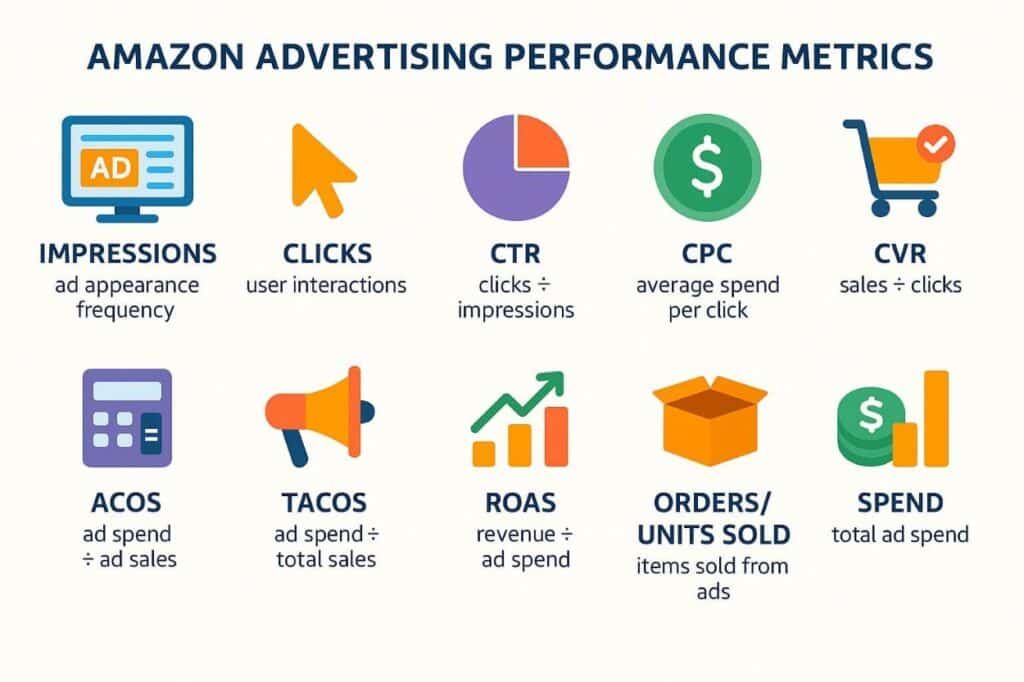
Despite rising costs, Top of Search ads are far from obsolete. They remain highly effective but only when used in situations where the economics support premium traffic. The key is aligning TOS spend with products, listings, and objectives that can sustain higher acquisition costs.
High-margin productsProducts generating $15–20+ in net profit per unit can absorb higher CPCs while maintaining acceptable ACoS targets.
New product launchesTOS can dramatically accelerate early visibility and review velocity, shortening launch timelines from 60–90 days to as little as 30–45 days.
Brand and keyword defenseDefending branded terms and top-performing keywords often justifies premium spend to prevent competitors from siphoning demand.
High-converting listingsProducts converting at 15% or higher are much better positioned to turn expensive clicks into profitable sales.
Seasonal or time-sensitive productsWhen selling windows are short, maximizing visibility quickly can outweigh higher CPC concerns.
Low-margin products, untested listings, and broad keyword experiments struggle to survive at Top of Search. Similarly, categories where shoppers prioritize price comparison over brand recognition tend to dilute the benefits of premium placement.
Top of Search doesn’t fix weak fundamentals; it amplifies them. Poor listings fail faster at the top than anywhere else.
Extracting real value from Top of Search requires excellence across listing quality, targeting precision, and bid control. Average execution often leads to losses, while disciplined optimization can deliver meaningful returns even at higher CPCs.
Strong performers treat TOS as a scalpel, not a hammer.
Conversion-first listingsInvest heavily in titles, bullets, imagery, pricing, and A+ content before scaling TOS spend. Premium traffic demands a premium presentation.
Keyword segmentationReserve Top of Search for exact-match, high-intent keywords while pushing broader discovery terms into lower-cost placements.
Dayparting disciplineIncrease bids during peak conversion windows, often 7–10 PM, and scale back during low-performing hours to preserve efficiency.
Aggressive negative keyword managementRegularly eliminate non-converting queries to prevent expensive clicks from draining budget.
Tight message alignmentEnsure keyword intent matches listing content precisely. Even minor mismatches can destroy conversion rates at high CPCs.
Sellers with strong analytical skills and time can manage TOS campaigns internally, but many benefit from hybrid or professional support. Experienced PPC managers often deliver 15–25% better efficiency through deeper analysis, faster iteration, and category-specific insights.
Advanced brands increasingly layer retargeting strategies to re-capture high-intent shoppers who clicked TOS ads but didn’t convert on the first visit.
Top of Search ads are still effective, but they are no longer a universal growth shortcut. In 2026, they reward discipline and punish complacency.
TOS makes sense for sellers with healthy margins, strong conversion rates, and clear strategic objectives such as launches or brand defence. For everyone else, jumping straight to premium placement often leads to inflated ACoS and shrinking profits.
For lower-margin products or extremely competitive keywords, sellers are often better served by strengthening organic rankings, improving listings, and using mid-page placements until the fundamentals support premium exposure.
Start with 3–5 proven products, run Top of Search for 30 days, and evaluate true profitability, including all Amazon fees. Scale only after confirming sustainable returns.
The sellers winning with Top of Search in 2026 don’t treat it as a magic bullet. They treat it as a precision growth tool deployed selectively within a broader, well-optimised strategy.
When supported by strong listings, realistic margins, and disciplined execution, Top of Search can still drive outsized results. When used blindly, it simply exposes weaknesses faster than any other placement.
Top of Search ads demand precision in 2026. Rising CPCs leave little room for trial and error, which is why many brands rely on Clickstera to stay profitable. Clickstera helps sellers focus spend on high-intent keywords, control placement-level bids, and eliminate wasted ad spend so Top of Search drives conversions, not just visibility.
Talk to Clickstera and get a clear next-step plan to scale your performance marketing.