Loading article
Loading page...
Walmart's transformation into a digital advertising powerhouse, now known as Walmart Connect, presents a significant opportunity for brands to reach a massive, high-intent audience. But with a complex ecosystem of ad formats, from on-site Sponsored Products to the expansive Walmart DSP, navigating this platform effectively is a major challenge. The line between a high-return campaign and wasted ad spend is often defined by strategy, not just budget.
This guide moves beyond generic advice to deconstruct real-world Walmart advertising examples. We will dissect the precise tactics, campaign objectives, and strategic thinking behind successful campaigns launched by both top-tier brands and Walmart itself. You won't just see what they did; you'll understand why they did it and how specific ad types were used to achieve distinct goals like driving online sales, increasing in-store foot traffic, or boosting new product visibility.
We'll break down the mechanics of Sponsored Products, Sponsored Brands, Display, and off-site DSP campaigns. For each example, you will get actionable takeaways and replicable frameworks that you can apply directly to your own advertising efforts. Consider this your playbook for mastering the Walmart Connect ecosystem, driving profitable growth, and gaining a competitive edge. Let’s dive into the strategies that separate the top performers from the rest.
The "Save Money. Live Better." campaign is more than just a tagline; it's Walmart's core operational philosophy and one of the most enduring Walmart advertising examples of integrated brand positioning. This omnichannel blueprint connects every consumer touchpoint, from national TV ads to in-aisle displays and Sponsored Product listings, under a single, powerful value proposition. The strategy’s success lies in its consistency, ensuring that whether a customer sees a back-to-school commercial or searches for "affordable laptops" on Walmart.com, the message of value and accessibility is seamless.
This approach reinforces Walmart's low-price guarantee while building long-term brand equity. It moves beyond simple product promotion to create a holistic brand experience centered on helping families stretch their budgets.
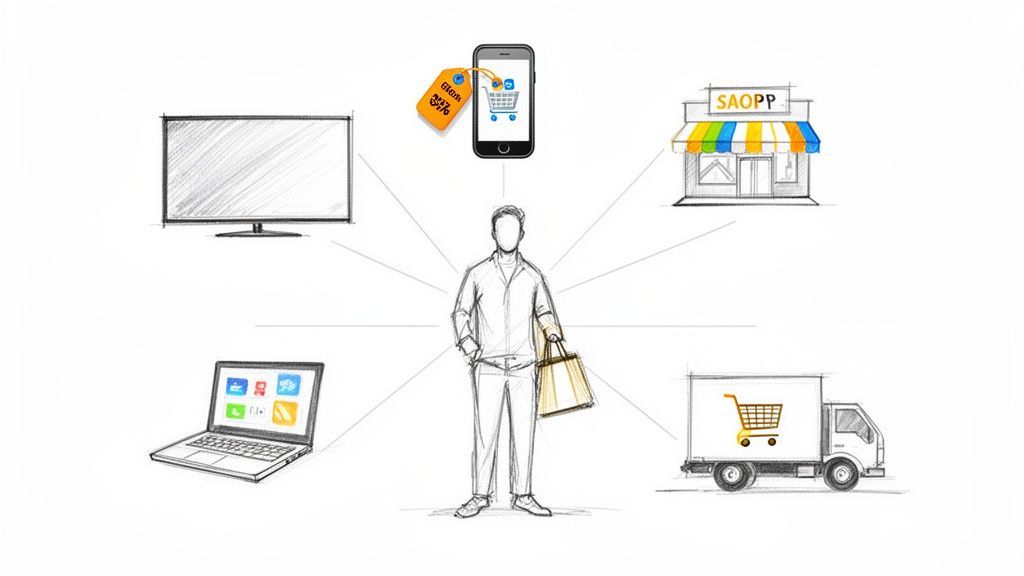
The campaign’s strength is its adaptability. For holiday promotions, it highlights gift guides and seasonal savings. For grocery, it leverages direct price comparisons and promotes the value of Walmart+, its subscription service. Each sub-campaign supports the central "Save Money. Live Better." theme, creating a unified narrative.
Brands can adopt this model by establishing a core value proposition and weaving it into every aspect of their Walmart advertising strategy. This means your Sponsored Brands headline, display ad creative, and even your keyword selection should all echo the same central message.
Key Strategic Insight: A unified omnichannel message reduces ad spend fragmentation. When your TV, social, and marketplace ads all communicate the same core value, you build compounding brand recognition and drive more efficient conversions across the entire funnel.
To replicate this omnichannel approach, focus on creating a consistent customer experience. Here are practical steps to get started:
Walmart’s grocery delivery and pickup service campaign is a prime example of high-intent, lower-funnel performance marketing. Instead of broad brand messaging, this strategy targets shoppers actively looking for convenience with dynamic, location-specific ads. This is one of the most effective Walmart advertising examples because it directly addresses a consumer need-state with a clear, actionable solution: order online and get your groceries today. The campaign leverages Walmart Connect’s powerful first-party data to reach audiences like busy parents, seniors, and urban professionals who value time savings.
The core of the campaign is its relevance. By using dynamic creative, ads can showcase real-time inventory, local deals on fresh produce, and highlight the immediate availability of pickup or delivery slots, turning a generic service promotion into a personalized call to action.
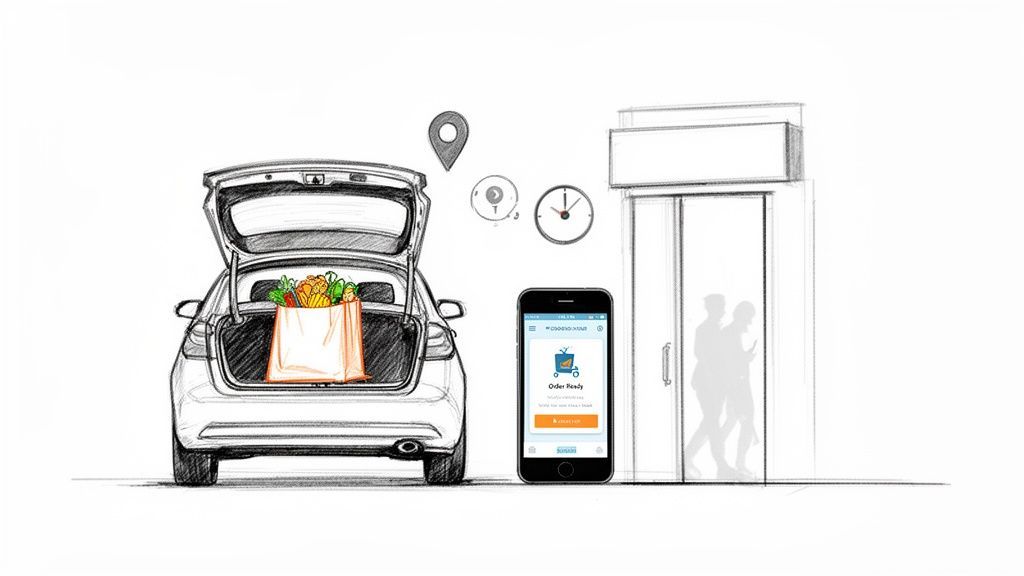
The campaign excels by segmenting its approach. Ads promoting holiday meal prep are timed before Thanksgiving and Christmas to capture high-volume orders, while weekly ads feature deals on staples like milk and eggs to drive routine purchases. It also brilliantly bundles its Walmart+ membership with free delivery offers, using a high-frequency service to sell a long-term subscription.
Brands can apply this model by targeting specific use cases for their products. Instead of a generic ad for "healthy snacks," create a campaign for "after-school snacks for kids" or "office breakroom restocking," aligning your product with a clear customer need and moment.
Key Strategic Insight: Hyper-local and time-sensitive targeting transforms a commodity service into a must-have solution. By aligning ad delivery with peak shopping hours and local inventory, you maximize relevance and drive immediate conversions at a higher return on ad spend (ROAS).
To replicate this performance-driven approach, focus on precision targeting and granular campaign management. Here are practical steps to get started:
Walmart leverages exclusive brand launches as powerful tools for differentiation and customer loyalty, making them standout Walmart advertising examples. By creating private labels like Great Value or securing exclusive rights to brands like Better Homes & Gardens, Walmart builds a unique product catalog that consumers can't find elsewhere. The advertising strategy is a coordinated, full-funnel push combining awareness, consideration, and conversion tactics to build brand equity from day one.
These campaigns transform a simple product launch into a major retail event. They use Walmart's entire advertising ecosystem, from broad-reach display ads targeting competitor audiences to hyper-specific Sponsored Products campaigns, to establish market dominance quickly and effectively.
The core strategy is to manufacture demand through exclusivity. For a brand like Wonder Nation children's apparel, Walmart runs back-to-school campaigns using Walmart DSP to target parents who have recently purchased from competing children's clothing brands. The ads emphasize the unique styles and value available only at Walmart, creating a compelling reason to switch. This is supported by on-platform Sponsored Brands ads that capture high-intent searches for "kids clothes" or "school uniforms."
Brands can apply this by launching a product line or SKU exclusively on Walmart.com for a set period. This creates urgency and provides a unique angle for your advertising creative and messaging, allowing you to highlight the "Only at Walmart" value proposition.
Key Strategic Insight: Exclusive launches create a defensible moat against competitors on and off the marketplace. By making your product a destination, you force competitors to react while you capture valuable first-party data and customer loyalty within the Walmart ecosystem.
To execute a successful exclusive launch campaign, you must integrate brand building with performance marketing.
Walmart's mastery of seasonal campaigns is a core pillar of its advertising success, representing a powerful example of capturing massive, predictable spikes in consumer demand. These campaigns are far more than just holiday-themed creative; they are fully integrated, multi-channel operations that leverage PPC, display, DSP, email, and national media to dominate seasonal shopping moments. From Black Friday to Back-to-School, Walmart executes with aggressive bidding, broad audience targeting, and synchronized promotions across all relevant categories.
This strategy is effective because it aligns marketing pressure precisely with peak consumer intent. By building dedicated campaigns for events like the holidays or tax refund season, Walmart ensures its messaging is timely, relevant, and supported by the promotional and logistical might needed to convert high-volume traffic into sales. This coordinated approach is one of the most visible and impactful Walmart advertising examples in action.
The strategic genius behind Walmart's seasonal campaigns is their proactive and segmented nature. A Back-to-School campaign, for example, isn't a single effort. It's a collection of sub-campaigns targeting distinct audiences: one for college dorm essentials, another for elementary school supplies, and a third for teacher classroom needs. This allows for hyper-relevant creative and precise keyword targeting.
Similarly, Black Friday and Cyber Monday campaigns are characterized by real-time bid optimization and deep integration with inventory management systems. This ensures ad spend isn't wasted promoting out-of-stock "doorbuster" deals. Brands can replicate this by building separate campaign structures for each major seasonal event, enabling independent budget control and performance tracking.
Key Strategic Insight: Seasonal campaigns should not be last-minute adjustments. Build dedicated retargeting audiences 4-6 weeks before the peak season begins. This creates a warm, high-intent pool of shoppers to target with conversion-focused creative when demand surges, dramatically improving ROAS.
To harness the power of seasonal demand on Walmart, you must plan ahead and segment your approach. Here are practical steps to implement this strategy:
Walmart's ongoing push for its Walmart+ subscription service is a masterclass in full-funnel marketing and a prime example of strategic Walmart advertising examples. This campaign goes beyond selling products to selling an ecosystem, emphasizing benefits like unlimited free delivery, fuel discounts, and exclusive deals. The strategy uses a powerful mix of performance marketing channels, including paid search, display, and in-store signage, to drive both new sign-ups and long-term member loyalty.
The campaign's sophistication lies in its data-driven segmentation. Walmart uses its first-party data and the Walmart DSP to reach high-value customer segments, such as frequent shoppers or those who have shown interest in competitor loyalty programs, with highly targeted value propositions designed to convert.
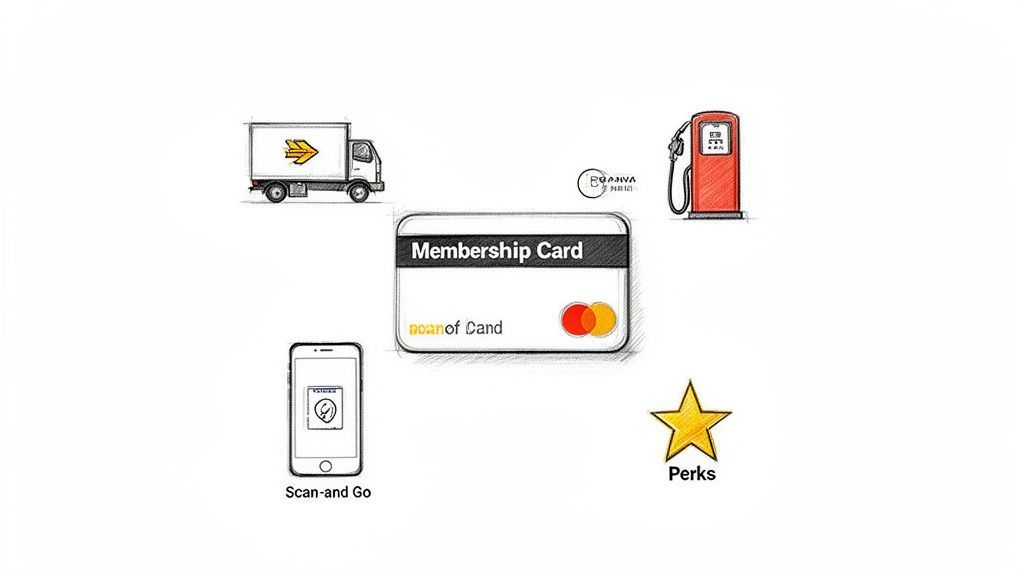
The strength of the Walmart+ campaign is its lifecycle approach. For acquisition, it runs paid search campaigns targeting keywords like "same-day delivery" with free trial offers. For retention, it deploys personalized email and push notification campaigns to members nearing their renewal date, offering incentives to prevent churn.
This dual focus on acquisition and retention creates a sustainable growth loop. Brands can apply this model by thinking beyond the initial sale and building campaigns that foster loyalty. This involves using customer data to segment audiences and deliver relevant messaging at each stage of their journey, from prospect to repeat buyer.
Key Strategic Insight: Customer Lifetime Value (LTV) should guide your ad spend. By segmenting member vs. non-member audiences, you can justify a higher customer acquisition cost (CAC) for high-potential subscribers, knowing their long-term value will deliver a greater ROI.
To build a similar loyalty-driven advertising model for your products on Walmart, focus on segmentation and lifecycle marketing. Here are actionable steps:
This hybrid B2B and B2C strategy is a prime example of Walmart using its own advertising platforms to fuel its marketplace growth. Rather than just promoting products, these campaigns target potential third-party sellers and highlight successful private label partners. This is one of the more unique walmart advertising examples because it uses retail media for platform recruitment and partner amplification, creating a powerful growth loop.
The strategy involves showcasing seller success stories, marketplace opportunities, and category differentiation through case studies and testimonials. By advertising its own ecosystem, Walmart attracts high-quality brands to its platform, which in turn improves the product selection and value for consumers.
This approach segments audiences with surgical precision. For instance, Walmart runs LinkedIn ads targeting existing Amazon sellers with "expand to Walmart" messaging, highlighting seller success metrics and simplified onboarding. Simultaneously, it uses Walmart.com feature collections to showcase top-performing brand partners, complete with their growth stories, which acts as both social proof for new sellers and a discovery tool for shoppers.
Brands on the marketplace can learn from this by creating their own "showcase" campaigns. Instead of just a generic product ad, a brand could run a Sponsored Brands campaign with a headline like "Meet the Family-Owned Brand Behind Your Favorite Snacks," linking to a custom shelf page that tells their story and features their top products.
Key Strategic Insight: Advertising the success of your partners creates a flywheel effect. By promoting the growth of its sellers, Walmart attracts more sellers, which increases product assortment and competition, ultimately benefiting the consumer and strengthening the marketplace.
To apply this "showcase" model, focus on telling stories and building credibility. Here are actionable steps:
Walmart’s demand-side platform (DSP), powered by its vast first-party shopper data, represents one of the most sophisticated Walmart advertising examples available to brands. This strategy leverages Walmart's deep understanding of consumer purchase behavior to build highly precise audiences for off-platform advertising. By partnering with platforms like The Trade Desk and Google, Walmart Connect allows brands to reach specific customer segments across the open internet, social media, and connected TV, all while adhering to strict privacy standards.
The core advantage is using real purchase data for targeting, a powerful alternative in a post-cookie world. Instead of relying on vague interests, brands can target audiences based on actual buying habits, such as "recent purchasers of competitor coffee brands" or "households that frequently buy organic snacks." This transforms ad spend from a broad awareness play into a targeted conversion driver.
This DSP-driven approach excels at full-funnel marketing. For top-of-funnel awareness, a brand can create a lookalike audience based on Walmart’s high-value customer segments to find new shoppers on platforms like YouTube or Meta. For mid-funnel consideration, they can retarget users who viewed their products on Walmart.com but didn't purchase, serving them compelling video or display ads on their favorite lifestyle blogs.
The system's precision allows for nuanced campaigns. For example, a home goods brand could serve ads for patio furniture on weather-related websites to users who previously bought gardening supplies at Walmart. This contextual and behavioral layering ensures ads are not only seen by the right person but also at the right moment.
Key Strategic Insight: Walmart's first-party data allows you to bridge the gap between on-platform and off-platform advertising. You can use verified purchase behavior to inform your awareness campaigns on social and display, creating a highly efficient path to conversion back on Walmart.com.
To leverage this powerful targeting, brands must think beyond simple keyword campaigns and embrace data-driven audience building.
Walmart has elevated its influencer marketing from simple brand awareness plays to a sophisticated performance channel. This strategy represents one of the most effective Walmart advertising examples of integrating authentic content with measurable e-commerce outcomes. By partnering with creators on platforms like TikTok, YouTube, and Instagram, Walmart drives product discovery and conversion through authentic storytelling, value comparisons, and direct-response mechanisms. Campaigns often feature creators showcasing Great Value products versus name brands or sharing exclusive Walmart fashion finds, all tied back to a shoppable call-to-action.
This approach transforms influencer content from a top-of-funnel tactic into a full-funnel driver. It leverages creators' credibility to showcase value and convenience, directly influencing purchase decisions and providing trackable ROI beyond simple engagement metrics.
The strategy’s power lies in its performance-oriented framework. Influencers are equipped with unique affiliate links, promo codes, and UTM-tagged URLs, allowing Walmart and its partner brands to attribute sales directly to specific creators and campaigns. This data-driven approach allows for continuous optimization, focusing investment on partnerships that generate the highest return on ad spend (ROAS).
For example, a TikTok creator's grocery haul video isn't just content; it's a performance asset with direct links to purchase each item on Walmart.com. Brands can adopt this model by structuring influencer agreements around clear conversion goals, ensuring that every piece of content serves a specific commercial objective.
Key Strategic Insight: Integrating performance metrics (affiliate links, promo codes) into influencer campaigns shifts the focus from vanity metrics like likes and views to bottom-line results like conversions and revenue. This makes influencer marketing a predictable and scalable sales channel, not just a brand-building exercise.
To build a performance-focused influencer program on Walmart, prioritize measurement and creator alignment. Here are practical steps to get started:
Campaign
Implementation Complexity
Resource Requirements
Expected Outcomes
Ideal Use Cases
Key Advantages
Walmart "Save Money. Live Better" Omnichannel Campaign
High — national-scale omnichannel coordination
Large media budget, creative teams, analytics, DSP/PPC integration
Broad brand awareness plus cross-channel conversion lift
Long-term brand positioning and mass-market reach
Strong brand recall, scalable messaging, omnichannel attribution
Walmart Grocery Delivery & Pickup Performance Campaign
Medium — geo & inventory-dependent performance setup
DSP/PPC specialists, local ops coordination, inventory/checkout integration
Measurable conversions, lower CAC, repeat orders
Local grocery/CPG conversion, service adoption drives
High ROI, intent-driven targeting, reduced purchase friction
Walmart Exclusive Brand Launches & Marketplace Visibility Campaign
High — SKU-level positioning and merchandising alignment
Inventory commitment, creative/content partnerships, PPC/DSP budgets
Trial, category authority, higher margins for exclusives
Private label launches, emerging CPG seeking differentiation
Proprietary positioning, better margins, strong storytelling potential
Walmart Seasonal Campaign Strategy (Back-to-School, Holiday, Black Friday)
Very high — real-time bidding and cross-team logistics
Large seasonal spend, inventory planning, real-time analytics
Concentrated revenue spikes and elevated ROAS during windows
Peak shopping events and promotional calendars
Predictable demand, high conversion intent, rapid testing opportunities
Walmart+ Membership Acquisition & Retention Campaign
Medium–high — subscription funnels and retention systems
CRM, lifecycle marketing, DSP, analytics for LTV measurement
Recurring revenue, higher member LTV, improved AOV
Subscription models, retention-first businesses, membership upsells
Predictable LTV, audience personalization, retention-driven growth
Walmart Marketplace Seller Program & Private Label Brand Showcase Campaign
Medium — B2B and B2C hybrid coordination
Content production, LinkedIn B2B, seller onboarding and support
Increased seller recruitment, expanded catalog, marketplace scale
Seller acquisition, platform growth, partner recruitment
Cost-effective inventory expansion, social proof, long-term network effects
Walmart Data & Analytics Partnerships – DSP-Driven Audience Targeting Campaign
High — clean-room and cross-channel data integration
Data engineering, privacy/compliance resources, DSP partnerships
Precision targeting, improved ROAS, unified attribution
Data-driven brand building, cookieless targeting, cross-channel measurement
First-party data advantage, privacy-compliant targeting, holistic measurement
Walmart Influencer & Content Partnerships – Performance Marketing Integration
Medium — creator management and tracking integration
Influencer network, affiliate/promo tracking, creative repurposing
Higher conversion from authentic content, scalable UGC for ads
Social-native product launches, UGC-driven conversion, awareness-to-purchase
Creator credibility, cost-effective reach, measurable promo-driven ROI
Throughout this deep dive, we’ve dissected a wide range of powerful Walmart advertising examples, moving far beyond surface-level descriptions to uncover the strategic scaffolding that holds them together. From the omnichannel dominance of "Save Money. Live Better." to the laser-focused precision of DSP-driven audience targeting for exclusive brand launches, a clear pattern emerges. Success on Walmart is not about isolated tactics; it's about building an integrated, full-funnel machine.
The campaigns we analyzed consistently demonstrate that top-performing brands don't just run ads. They architect comprehensive growth engines where Sponsored Products capture high-intent shoppers, Sponsored Brands build category authority, and sophisticated Walmart Connect DSP campaigns engage consumers from initial awareness to final conversion and beyond. They masterfully blend creative storytelling with data-driven execution, turning every touchpoint into an opportunity.
If we distill these diverse Walmart advertising examples down to their core components, a replicable framework for success becomes evident. This isn't a secret formula, but rather a strategic commitment to a set of core principles. Mastering this framework is the key to moving from simply being present on the platform to actively commanding market share.
Three Pillars of Walmart Advertising Mastery:
Seeing these Walmart advertising examples is inspiring, but inspiration without action is just observation. The true value lies in translating these insights into a tangible execution plan for your own brand. Your next steps should be focused, methodical, and measurable.
Here is a practical checklist to bridge the gap between learning and doing:
Ultimately, the most successful Walmart advertising examples reveal a fundamental truth: sustained growth on the platform is a discipline. It requires a sophisticated understanding of the Walmart Connect ecosystem, a relentless focus on data, and the operational capacity to manage complex, multi-layered campaigns. For many brands, navigating this landscape while also managing product, inventory, and operations can be overwhelming. This is where a strategic partner becomes an invaluable asset.
Executing these advanced strategies requires deep expertise and significant resources. If you're ready to transform these examples into your brand's next success story, the team at Clickstera Solutions LLC can build and manage the performance-driven campaigns you need to scale profitably. We specialize in turning the complex Walmart advertising ecosystem into a predictable engine for growth for our clients.
Schedule a Free Consultation with Clickstera Solutions LLC Today to discover how we can implement these winning frameworks for your brand.
Talk to Clickstera and get a clear next-step plan to scale your performance marketing.